Bills, Bills, Bills… Manitoban Government Introducing New Bills
The Manitoba Legislative session is in full swing. More than 43 new proposed pieces of legislation (also known as Bills) have been introduced in the Manitoba Legislature since March 5th.
To help try to keep you up to date, here is an overview of some of the Bills of interest to Manitoba’s Eco-Community, and a little bit about the process.
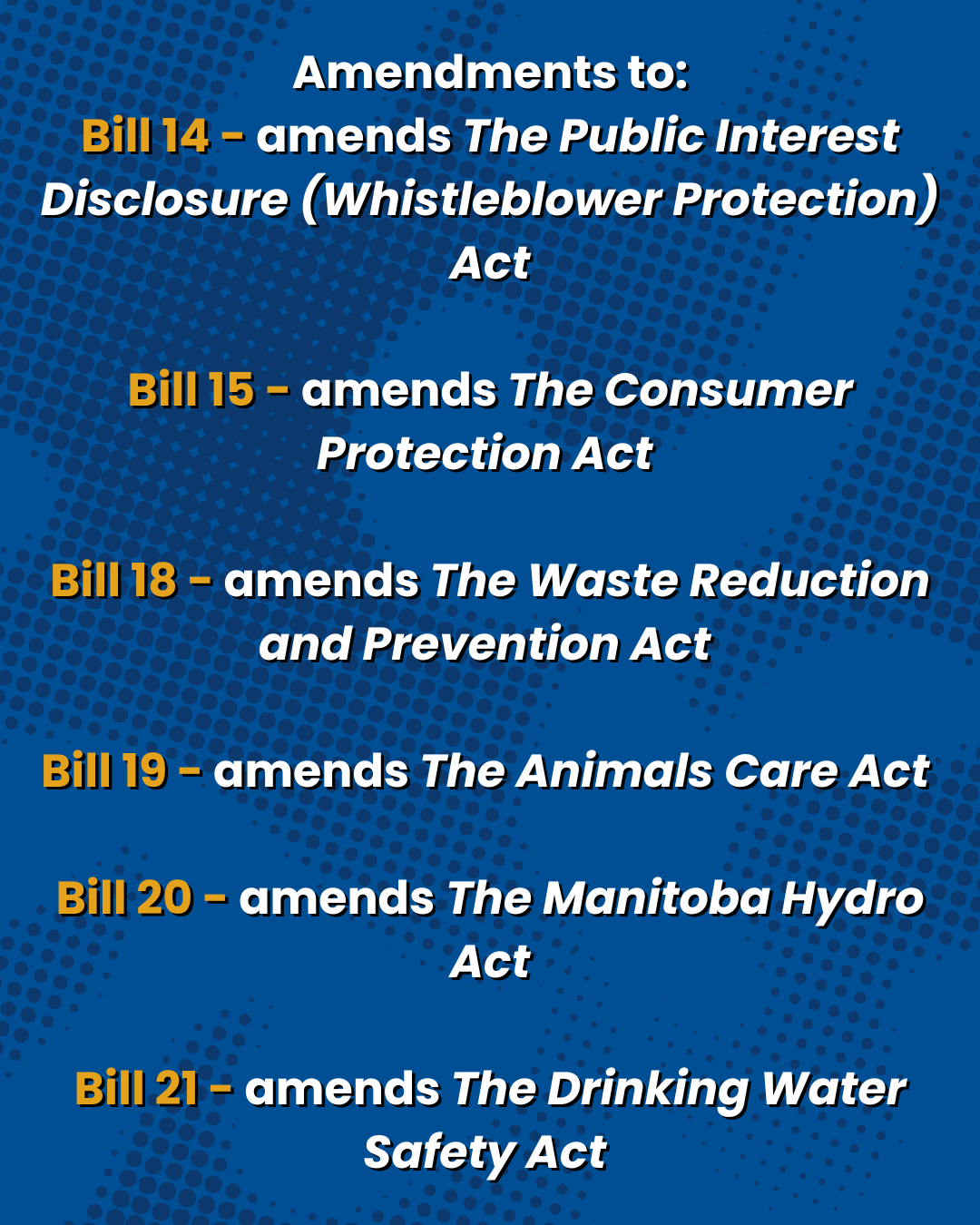
- Bill 14 – amends The Public Interest Disclosure (Whistleblower Protection) Act to enhance protection when allegations involve senior officials.
- Bill 15 – amends The Consumer Protection Act to ensure access to the parts, tools, software and manuals necessary to repair consumer goods.
- Bill 18 – amends The Waste Reduction and Prevention Act to establish a director responsible for the Act, and enhances enforcement measures under the Act.
- Bill 19 – amends The Animals Care Act to require a license to sell or transfer ownership of pet animals, clarifies standards regarding the acceptable treatment of animals, allows incorporation of standards from recognized animal welfare organizations into regulation, clarifies court procedures and expands the types of Orders a Court may make, and increases the maximum fines and terms of imprisonment under the Act.
- Bill 20 – amends The Manitoba Hydro Act to establish a curtailable power program for customers engaged in cryptocurrency operations
- Bill 21 – amends The Drinking Water Safety Act to expand the director’s authority to classify water systems and address situations where the owner of a water system cannot be identified.
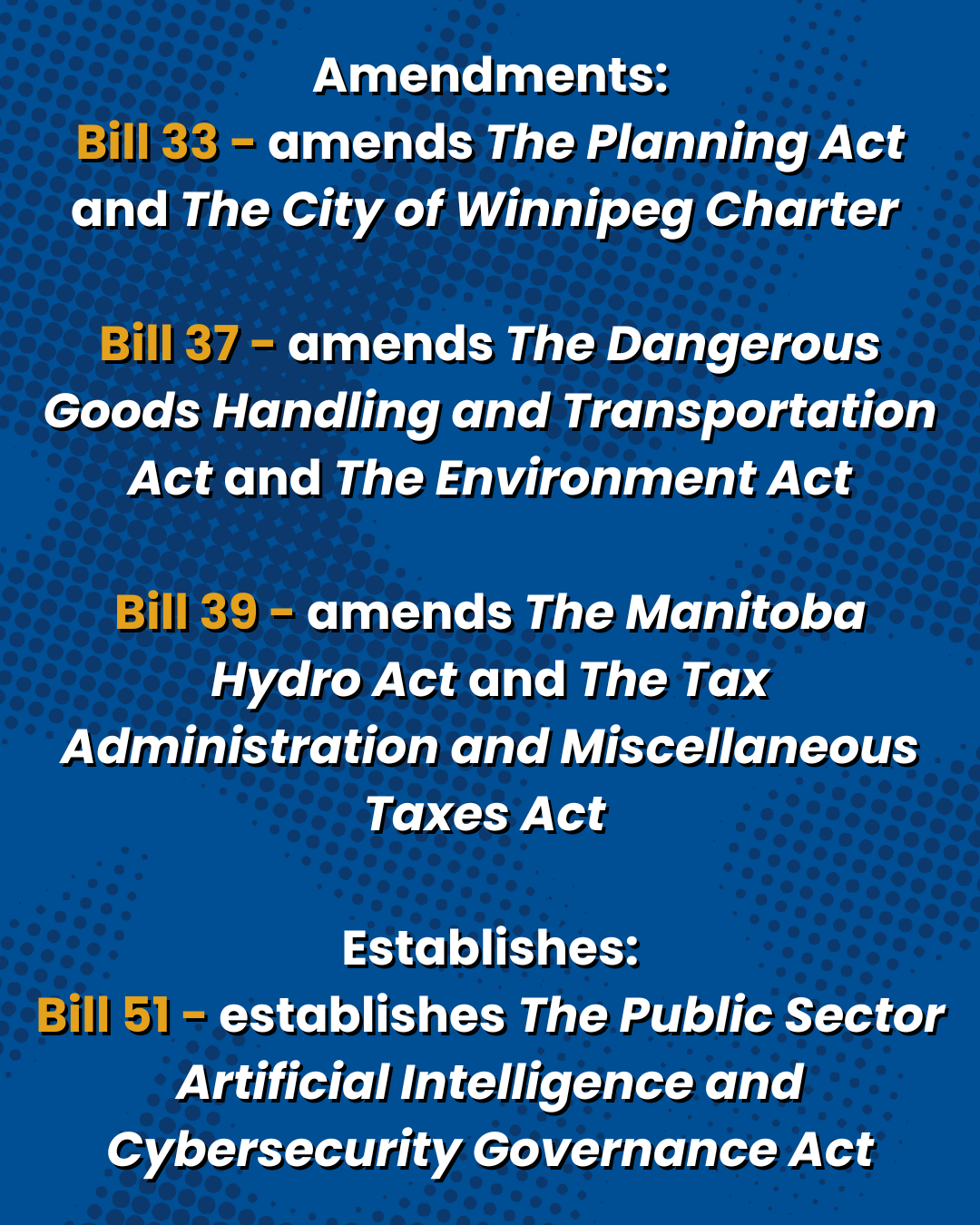
- Bill 33 – amends The Planning Act and The City of Winnipeg Charter to clarify timelines and requirements for Municipal Board hearings. Additional changes are made to The Planning Act, including allowing a 15% increase in animal units for livestock operations with a supply management quota without a new conditional use approval, and minor changes to conditional use approvals for large-scale livestock operations no longer require Technical Review Committee review.
- Bill 37 – amends The Dangerous Goods Handling and Transportation Act and The Environment Act to prohibit giving false or misleading information, extends the deadline to initiate a prosecutive for an offence, enhances the authority to make regulations respecting fees, and expands and clarifies what information is made available in the public registry. The Waste Reduction and Prevention Act is also amended to determine the amount of the waste reduction and recycling support levy by regulation.
- Bill 39 – amends The Manitoba Hydro Act and The Tax Administration and Miscellaneous Taxes Act so that customers who are engaged in cryptocurrency operations or who operate large-scale data centres and other large power supply projects must pay a levy on the power supplied to them by Manitoba Hydro.
- Bill 51 – establishes The Public Sector Artificial Intelligence and Cybersecurity Governance Act which enables the establishment of regulations for public sector entities (such as the government, a government agency, a health authority, a university, a school division or a municipality) with respect to the use of artificial intelligence systems and cybersecurity.
You can always check out the entire list of sessional bills (here), and you can check on the current status of bills (here).
—– —– —–
Did you know the public has the opportunity to provide input in the law making process by providing oral or written submissions regarding proposed Bills through the Committee process?
We encourage you to participate in the Legislative process. Your voice and your opinions matter, and can make a real difference. Public comments can sometimes lead to amendments that improve new laws, or stop the passage of bad laws.
In order for a Bill to become law it must be passed by the Legislature three times (known as readings), appear before Committee, and receive Royal Assent. Read more about the process here.
The Committee Stage occurs after a Bill has passed First and Second Reading, where a Bill is referred to a Standing or Special Committee, or to a Committee of the Whole House for consideration.
Once the Bill receives First Reading, members of the public may register to provide written comments or to speak at Committee stage by completing the online presenter registration form on the Manitoba Legislative website, or you may register by phoning the Office of the Clerk of the Legislature at 204-945-3636. Click here to learn more about how standing committees operate.